What To Pack First When Moving | A Room-by-Room Packing Guide
Not sure where to start packing? Learn what to pack first, what to leave until the last minute, and how to organize your move for a smoother moving day.

Packing is often the most time-consuming part of moving.
One of the biggest mistakes people make is waiting until the last few days to start packing. This usually leads to rushed decisions, misplaced items, and unnecessary stress.
The good news is that packing doesn’t have to feel overwhelming.
The secret is simple: pack in the right order.
Instead of packing randomly, start with the items you use the least and gradually work toward your everyday essentials.
Here’s a room-by-room guide to help you pack smarter and make moving day much easier.
Start With Items You Rarely Use
The first things you should pack are the items you won’t need before moving day.
These include:
- Seasonal clothing
- Holiday decorations
- Books
- Picture frames
- Collectibles
- Extra linens
- Guest room items
- Sports equipment
- Storage items
Packing these early gives you a head start without disrupting your daily routine.
Pack One Room at a Time
Trying to pack your entire home at once can quickly become overwhelming.
Instead, focus on one room before moving to the next.
A good order might be:
- Guest bedroom
- Storage room
- Home office
- Dining room
- Living room
- Bedrooms
- Kitchen
- Bathrooms
Completing one room at a time helps you stay organized and makes unpacking much easier.
The Guest Room Comes First
If you have a guest bedroom, it’s often the easiest room to pack first.
Most guest rooms contain items that aren’t used every day, such as:
- Extra blankets
- Decorative pillows
- Spare bedding
- Seasonal storage
Packing this room first gives you confidence and momentum before tackling busier areas of the home.
Leave Everyday Essentials Until the End
Not everything should be packed right away.
Continue using these items until moving day:
- Daily clothing
- Toiletries
- Medications
- Phone chargers
- Laptop
- Coffee maker
- Basic cookware
- Cleaning supplies
- Pet supplies
- Children’s daily necessities
Keeping these items accessible makes the final days before your move much more comfortable.
Pack the Kitchen Last
The kitchen is usually one of the last rooms you should pack.
You’ll likely continue using:
- Plates
- Cups
- Coffee maker
- Pots and pans
- Refrigerator
- Microwave
- Basic utensils
About two days before moving, begin packing everything except the items you’ll need for your final meals.
Don’t forget to label fragile kitchen boxes clearly.
Label Every Box Clearly
Good labeling saves hours during unpacking.
Instead of writing only:
Kitchen
Write:
Kitchen — Plates & Glasses
Kitchen — Pantry Items
Bedroom — Winter Clothes
Bathroom — Towels & Toiletries
Also mark boxes as:
FRAGILE
whenever necessary.
Clear labels help both you and your movers know exactly where each box belongs.
Don’t Overfill Boxes
Heavy boxes are difficult to carry and more likely to break.
A better approach is:
- Heavy items in small boxes
- Light items in large boxes
For example:
Small boxes:
- Books
- Tools
- Dishes
Large boxes:
- Pillows
- Blankets
- Towels
- Clothing
Balanced boxes are safer and easier to move.
Pack an Essentials Box
One box should never go on the moving truck until the very end.
This is your “Essentials Box.”
Include:
- Phone chargers
- Medications
- Toiletries
- Important documents
- Snacks
- Water
- Coffee or tea
- Paper towels
- Change of clothes
- Basic cleaning supplies
- Pet food
- Children’s essentials
Think of it as your overnight bag for moving day.
You’ll appreciate having everything you need without opening multiple boxes.
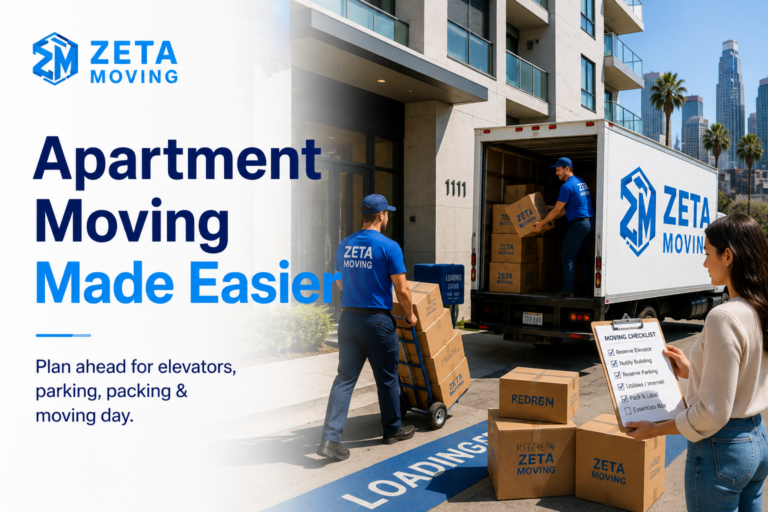
Confirm Building Requirements
If you’re moving into or out of an apartment, ask about:
- Elevator reservations
- Parking permits
- Loading zones
- Building moving hours
Many apartment buildings require advance notice.
Protect Fragile Items
Wrap delicate belongings individually using:
- Bubble wrap
- Packing paper
- Towels
- Soft blankets
Fill empty spaces inside boxes to prevent items from shifting during transport.
Never place heavy items on top of fragile boxes.
Taking a little extra time now can help prevent damage later.
Create a Packing Schedule
Packing everything in one weekend can feel exhausting.
Instead, create a simple schedule.
Two Weeks Before
✔ Pack storage areas
✔ Pack guest room
✔ Pack seasonal items
One Week Before
✔ Pack decorations
✔ Pack books
✔ Pack most clothing
✔ Pack home office
Two Days Before
✔ Pack most of the kitchen
✔ Pack bathroom extras
✔ Prepare the Essentials Box
Moving Day
Keep only the items you’ll use that morning.
Everything else should already be packed and labeled.
Common Packing Mistakes to Avoid
Many moving delays happen because of simple packing mistakes.
Avoid these common errors:
❌ Waiting until the last minute
❌ Mixing items from different rooms
❌ Forgetting to label boxes
❌ Overpacking heavy boxes
❌ Packing important documents inside moving boxes
❌ Forgetting an Essentials Box
A little planning makes unpacking much easier.
Final Thoughts
Packing doesn’t have to be stressful.
Starting with the right rooms and packing in a logical order helps you stay organized, protect your belongings, and avoid last-minute rushing.
Remember:
✔ Pack rarely used items first.
✔ Leave everyday essentials for last.
✔ Label every box clearly.
✔ Protect fragile belongings.
✔ Keep one Essentials Box with you.
At Zeta Moving, we believe that good packing is the foundation of a successful move. The better prepared you are before moving day, the smoother the entire process will be.
If you’re planning a move in Los Angeles, our experienced team is here to help with professional service, transparent pricing, and expert moving advice every step of the way.
Contact Zeta Moving today for a free, transparent quote and let us help make your move simple, organized, and stress-free.